





A Fire Risk Assessment (FRA) is a crucial, systematic process required to protect lives and premises from fire. It involves identifying fire hazards and people at risk, evaluating the risks, and implementing suitable control measures to reduce them to an acceptable level.
The primary difference between domestic and commercial FRA lies in the legal requirement and scope. In domestic properties (single private dwellings), an FRA is not typically a legal requirement unless it is a House in Multiple Occupation (HMO).For commercial properties (workplaces, public buildings, and common areas in blocks of flats), an FRA is a statutory obligation under fire safety legislation. Commercial assessments are generally more complex, covering emergency procedures, staff training, and compliance with specific industry standards, whereas domestic assessments focus more on structural integrity and escape routes.
Choosing Granada Services for your Fire Risk Assessment provides significant, multifaceted benefits that extend far beyond simple compliance. Our detailed reports give you complete peace of mind by providing expert knowledge about the specific fire risks within your property, allowing you to address them proactively. This is especially vital in light of increased scrutiny following the Grenfell Tower disaster, which underscored the critical need for meticulous fire safety standards and accountability. By providing a comprehensive, government-compliant report, we help you meet your legal obligations under the Regulatory Reform (Fire Safety) Order 2005 and other relevant legislation. Landlords, HMO managers and owners, and estate agents will find our reports invaluable. We clearly outline necessary upgrades and maintenance, enabling you to enhance the safety profile of your properties. This detailed, actionable guidance instils relief and confidence, knowing you have taken the necessary steps to protect your tenants, comply with the law, and safeguard your investment.
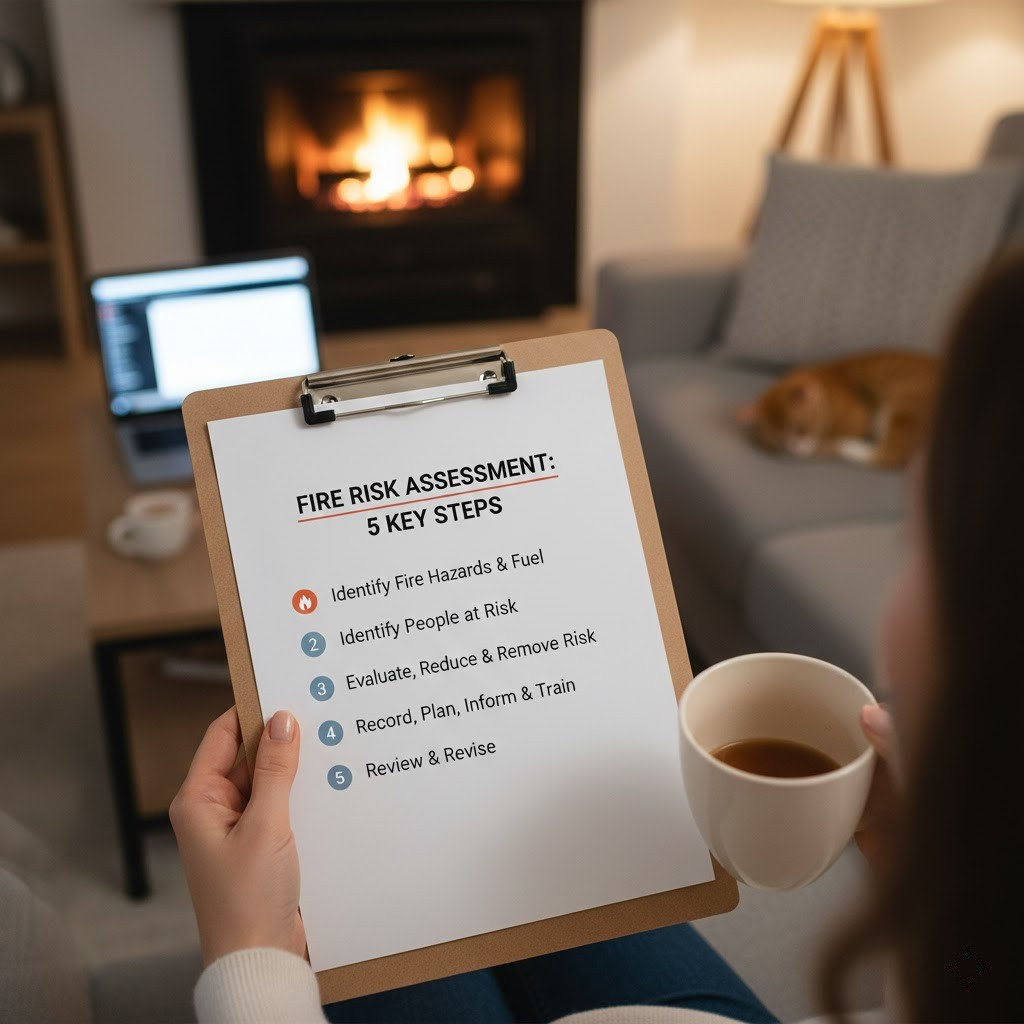
The standard Fire Risk Assessment process follows five key steps, ensuring a thorough and systematic evaluation of your premises.
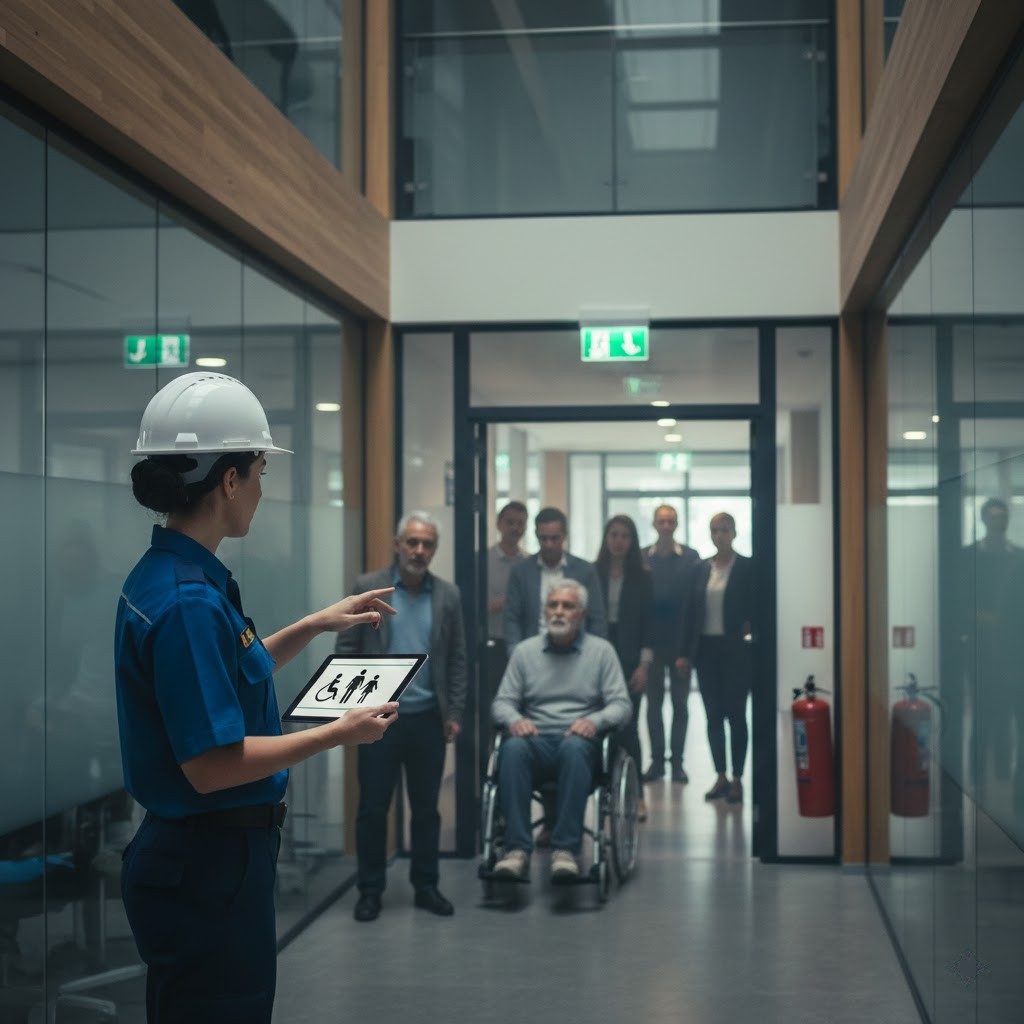
An FRA must identify who is at risk in the event of a fire, paying special attention to vulnerable groups. In a commercial setting, this includes employees, visitors, contractors, and specifically, those with disabilities, or people unfamiliar with the premises. For domestic HMOs and blocks of flats, this focuses on residents, particularly those on upper floors, or any residents who may have difficulty evacuating unaided. Identifying the people at risk dictates the required measures for warning, evacuation, and the provision of suitable escape routes.

This step involves a detailed survey of the premises to identify potential sources of fire and the materials that can fuel it. For commercial properties, this includes examining electrical equipment, heating systems, cooking facilities, flammable liquids, waste storage areas, and process-specific hazards like dust or machinery. In a domestic HMO, the focus is on overloaded sockets, faulty appliances, candles, smoking materials, and general housekeeping standards. The goal is to spot anything that could start a fire (ignition source) and anything that could make it spread (fuel source).

This is the core of the assessment, where the identified hazards and risks are evaluated to determine if the existing fire safety measures are adequate. If the risk is unacceptable, measures must be implemented to remove or reduce it. For commercial premises, this might involve improving housekeeping, upgrading fire doors, installing new detection systems, or improving staff training. In a domestic HMO, it could mean ensuring all fire doors are functional, installing interlinked smoke alarms, or restricting the storage of flammable materials in common areas.
Once the evaluation and necessary remedial actions are complete, they must be officially documented. This involves creating a comprehensive record of the significant findings, the action plan, and the emergency plan. For commercial clients, this includes formally communicating the findings to all employees, establishing detailed evacuation procedures, and ensuring all staff receive appropriate fire safety training. In domestic HMOs, this means clearly displaying fire safety instructions and ensuring residents are aware of escape routes and alarm procedures.
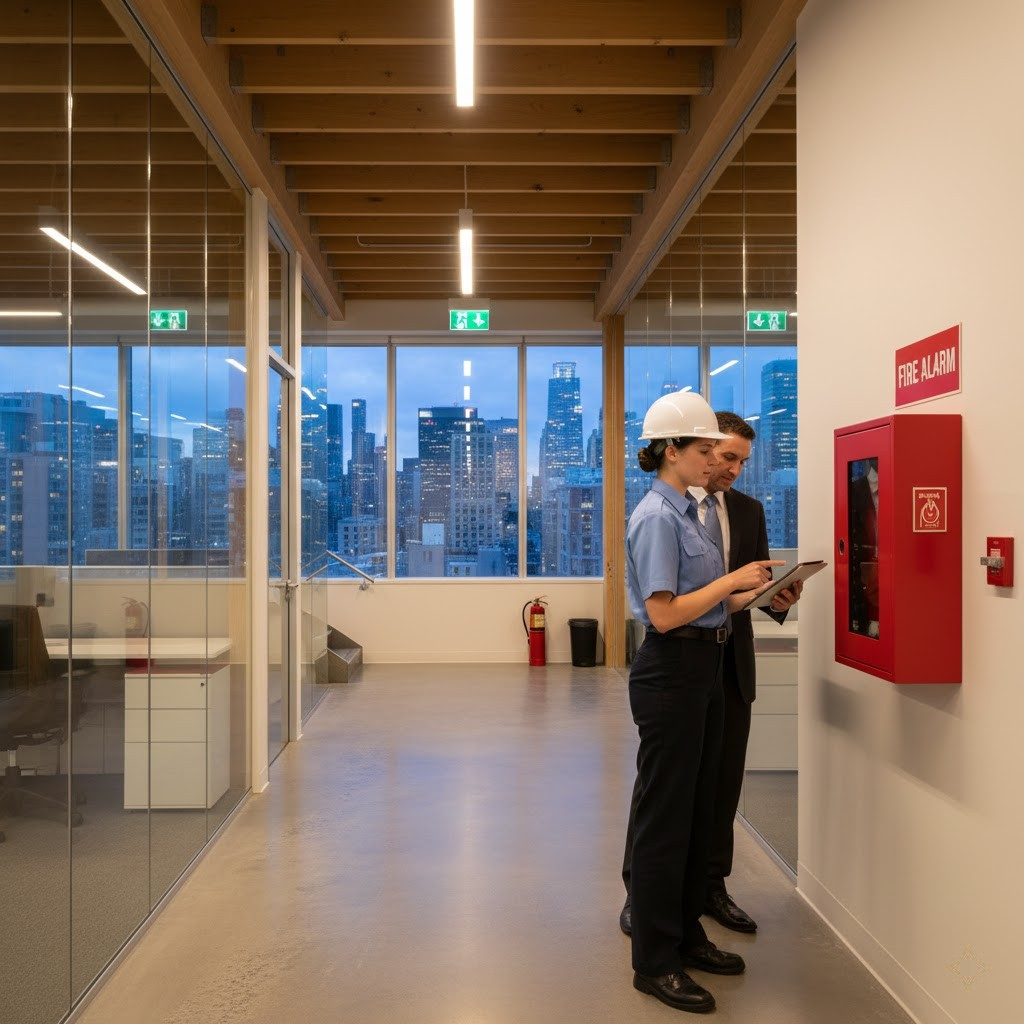
Fire safety is an ongoing responsibility, not a one-off task. The FRA must be kept up-to-date. For both commercial and domestic properties (especially HMOs), the assessment must be reviewed regularly—typically annually—or whenever there are significant changes to the premises. Changes include structural alterations, the introduction of new processes, a change in occupancy, or the occurrence of a fire incident. This ensures that the fire safety provisions remain effective and legally compliant over time.